Creating industry-ready educators in the early childhood sector
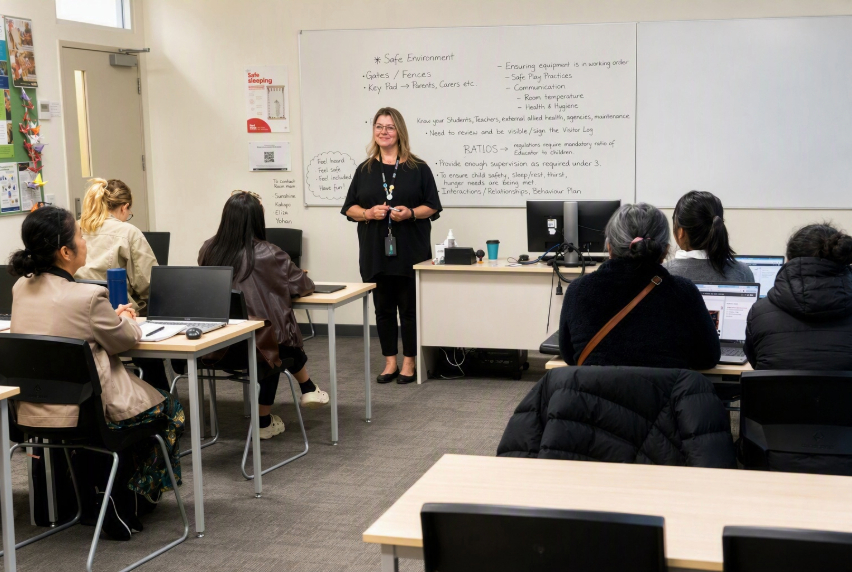
With more than 25 years’ experience in early childhood education, Melbourne Polytechnic teacher Susie Kounoupis is preparing the next generation of educators with a combination of inclusive teaching practices and industry engagement.
With more than 25 years’ experience in early childhood education, Melbourne Polytechnic teacher Susie Kounoupis is preparing the next generation of educators with a combination of inclusive teaching practices and industry engagement.
Working in a sector facing significant workforce shortages and increasing regulatory complexity, Susie makes sure students graduate feeling confident, capable and ready for the job ahead.
The results speak for themselves.
Around 70 per cent of Early Childhood Education and Care students at Melbourne Polytechnic receive a job offer after finishing their practical placement.
A purpose-driven career choice
Susie's decision to pursue a career in early childhood education was driven by a desire to make a meaningful difference.
“I have always been passionate about supporting children’s learning and development during the most important years of their lives,” she says.
“Over the past 20 years, I have seen firsthand the positive impact that quality education and care can have on children, families and communities.”
Her journey in the sector began studying at Melbourne Polytechnic herself, then known as NMIT. The support and mentorship Susie received during her own studies built a strong foundation of skills and a genuine passion for the profession.
“I was fortunate to be supported by incredibly knowledgeable, inspiring and passionate teachers,” she says. “Their guidance and commitment to quality education helped shape the educator I am today.”
Now, Susie feels a responsibility to pass that same level of respect and commitment on to her own students.
“Many students begin their training feeling unsure of themselves," she says. “It is rewarding to watch them develop into competent and compassionate educators.”
Real-world experience
Through carefully designed learning experiences, Susie makes sure students are exposed to real-world settings that prepare them for the realities of working in the sector.
“Our training is highly practical and designed to give students authentic industry experiences,” she explains.
Students participate in excursions to a variety of early childhood settings, where they observe best practice and gain insight into different service models.
Learning is further enhanced through visits to locations including Melbourne Museum, Darebin Parklands, CERES and Edendale Farm, with each excursion designed to support specific areas of the curriculum.
Industry partnerships and placements
Industry partnerships also play an important role in helping students prepare for their careers.
Students benefit from guest speakers and direct engagement with employers, providing valuable exposure to current sector expectations and emerging trends. They also gain practical experience through placements with carefully selected organisations.
Throughout the placement process students are supported by workshops where they learn to design educational resources, develop observation and documentation skills, and create learning experiences aligned with current workplace standards.
“These experiences help bridge the gap between classroom learning and professional practice, ensuring graduates are job ready from the moment they graduate,” Susie explains.
Culturally responsive learning builds confident professionals
Susie teaches diverse cohorts that include students from culturally and linguistically diverse backgrounds, neurodivergent learners and those returning to study after long periods away from education.
Recognising that confidence and engagement can be significant barriers to success, Susie uses plain-language explanations and individualised support to ensure every student feels capable and supported. Her approachable teaching style creates a strong sense of trust and psychological safety, encouraging learners to seek help, ask questions and build confidence.
This inclusive, learner-centred approach has delivered measurable results, contributing to a 20 per cent increase in student retention between 2024 and 2025.
“Culturally inclusive practice is essential because it creates a learning environment where every student feels respected, valued and represented,” she says.
“By teaching students to embrace diversity and incorporate culturally responsive practices, we help ensure that all children can see their identities, cultures and experiences reflected in their learning environments.”
Bunjil the Eagle project
An example of Susie’s commitment to culturally inclusive learning is the Bunjil the Eagle project.
Developed in partnership with The Yurrongi Centre, Melbourne Polytechnic’s central meeting place for Aboriginal and Torres Strait Islander peoples, the project brought students together to create a large-scale artwork of Bunjil the Eagle, which will soon be displayed in the Building F corridor of the Early Childhood teaching area at Preston campus.
Alongside the artwork, students took part in guided discussions and reflective learning activities. Pierra Van Sparkes from The Yurrongi Centre spoke with the class about cultural safety and the significance of Aboriginal art in south-east Victoria. These sessions deepened students’ understanding and helped equip them to deliver respectful, inclusive learning experiences.
Susie also organised an excursion to Melbourne Museum's Bunjilaka Aboriginal Cultural Centre, where students explored exhibitions, viewed artworks and visited their Bunjil the Eagle display.
Giving early learning educators a step-up
By connecting strong industry partnerships and culturally responsive teaching, Susie continues to strengthen Melbourne Polytechnic’s Early Childhood programs, ensuring students graduate with the skills to succeed in a rapidly evolving sector.
The result is a group of confident, industry-prepared educators, ready to deliver better outcomes for children, families and their communities.
Read about our Early Childhood Education courses.