Bachelor of Education (Early Years and Primary Education)
Overview
4 years full time / 8 years part time
4 years
February, July
February, July
Inspire the next generation with a Bachelor of Education (Early Years and Primary Education)
Become the teacher you always wanted and transform lives from inside the classroom with this rewarding degree.
Grow your skills through a mix of on-campus learning and 100 days of real-world placements in childcare, kindergarten and primary school settings.
Learn from supportive and encouraging academics while applying your knowledge in our unique on-site early childhood room.
Our Bachelor of Education has an incredible success rate with all graduates from last year now employed in the education sector. This qualification will qualify you to apply for dual registration as a Kindergarten and Primary teacher with the Victorian Institute of Teaching (VIT).
Career Pathways
Where will the Bachelor of Education (Early Years and Primary Education) take me?
This qualification will allow you to apply for dual registration (Kindergarten and Primary) with the VIT (Victorian Institute of Teaching). You can also work as an educator (room leader) in a long day care children’s service or as a co-educator (assistant) in kindergarten.
- Long day care educator (room leader)
- Kindergarten co-educator (Assistant)
Study Pathways
Successful completion of this course may enable you to study for a post-graduate qualification.

Course Details
Delivery methods
Your professional placement includes an embedded practical component of 120 days placement in child care, kindergarten and primary school settings.
Domestic students may be eligible to receive Commonwealth Prac Payment (CPP) while completing the placement. Learn more and check your eligibility
- Practicum
- Classroom
Class Schedule
Part time timetable is 2 days per week, 9am to 5pm.
Assessment Methods
Assessment methods include written research papers, personal and group presentations, reflective journal practice, and e-portfolio.
Units of Study
Credit points are a basic measure of student workload. All subjects are given a credit point value. Most subjects at Melbourne Polytechnic are 12 credit points. A normal full-time annual workload is 96 credit points. The academic year is divided into two main semesters; full-time students usually enrol in 48 credit points each semester, part-time students usually enrol in 24 credit points each semester or less.
| Code | Subject | Elective | Description | Year | Semester |
| EDU002 | The Arts in Education | Core | This is a first-year subject that is designed to introduce you to teaching The Arts to children. This umbrella subject includes all The Arts disciplines: Music, Dance, Drama, Visual Art, and Media. It introduces you to strategies to support children’s engagement with and learning through the arts. The subject introduces education students to the role of the performing arts in the holistic development of children and adults. You will learn the importance of creativity, curiosity, self-expression, and multi-modality in the learning process and how to effectively plan, facilitate and support this through the performing arts and deepen this critical reflection. You will come to appreciate the benefits of the performing arts as a way to explore personal, cultural and social worlds and as a vehicle for self-expression and communication, and its advantages in an anti-bias pedagogical approach to support diversity and inclusion. You will experience the arts as a possible space to explore the value of multiple perspectives and as a context for transformative education. You will learn how to engage children actively (EYLF) in learning by integrating these art forms into other discipline areas, such as literacy and numeracy. You will engage with contemporary research to build your philosophical and pedagogical position on how the arts can both engage and support learners. The subject will require you, through hands-on art experiences, to question your own philosophical and pedagogical biases to deepen your understandings of the core themes: multiple perspectives, intentional & strategic teaching, social justice & equity and critical reflection. This subject requires you to investigate how children engage with and develop knowledge and skills through the arts. |
1 | |
| EDU101 | Philosophies and Theories of Teaching and Learning | Core | This first-year subject provides you with an introduction to education through an investigation of the early years of education’s historical, philosophical, political and sociological bases and its intersections with broader curriculum theory and praxis. You will be introduced to different perspectives of education to understand how philosophies, theories and beliefs influence teachers’ decisions and practices in the classroom. You will explore diverse educational theories and examine contemporary perspectives and issues in early childhood and primary education in Australia and internationally. You will reflect on yourselves as learners, as well as your own backgrounds and experiences of education and the impact of these on your own identities as teachers. You will develop broad understandings of the range of contemporary practices available to teachers across the early years continuum and develop and reflect on your own philosophies of education. |
1 | 1 |
| EDU103 | Curriculum Approaches in Education | Core | This first-year subject provides an exploration of curriculum theory and how curriculum development principles intersect with concepts of individual and group dynamics in learning to support equitable educational outcomes for children across diverse contexts. You will engage with broad principles of curriculum theory and explore the model of the curriculum cycle to investigate key aspects of observation, documentation, interpretation, planning, implementation and reflection in teaching and learning. You will develop your teaching skills by undertaking, documenting and interpreting diverse observations of children and collecting relevant data to use to evaluate student learning and modify teaching practice. You will identify the ways that data is used to inform individual and group learning plans and support the planning and delivery of learning programs that maintain and build on learning outcomes. You will become skilled in drawing from diverse theoretical understandings of the child and their social contexts in order to consider the most effective and equitable ways to support children’s learning. |
1 | 1 |
| EDU104 | Introduction to Wellbeing | Core | In this first-year subject you will learn about the range of factors that influence children’s growth, learning and development with a focus on social and emotional behaviour. You will explore practices, strategies and experiences which promote wellbeing, including classroom and behaviour guidance. A key focus includes understanding how relationships influence the developing child and their sense of self-efficacy and self-worth. A consideration of major theories that have influenced contemporary understandings of wellbeing will be discussed, along with the ways these can be applied to support children’s social and emotional learning. | 1 | 1 |
| EDU105 | Play-Based Pedagogies | Core | This first-year subject provides an introduction to curriculum theory and praxis and critically examines play-based learning as a pedagogical approach in early years education. You will begin to develop your knowledge of the connections between learning, teaching and play, and the skills required to question and reflect on this in order to implement responsive, reciprocal and respectful teaching practices across diverse contexts in the early years. | 1 | 2 |
| EDU106 | Language, Literacy and Communication (Birth – 8) | Core | This subject investigates how language and emergent literacy develop in infants and young children from birth to 8 years. You will investigate theories and approaches to supporting early language and literacy development, taking into account the experiences of children from a diverse range of linguistic and cultural backgrounds. You will consider the relationship between family, community, care and educational settings and their implications for practice. You will also learn to assess, monitor and plan children’s language and literacy development to enable them to become effective communicators. | 1 | 2 |
| EDU107 | Global Perspectives and Comparative Education | Core | This first-year subject introduces you to the global context of early childhood education, educational debates, changes and reforms, both locally and globally. You will be introduced to framework documents, political contexts and the practical elements of education around the world. You will examine the concept of comparative education and the benefits and limitations involved with this process. You will have the opportunity to critically examine chosen countries alongside the Australian context and begin to recognise global approaches to education, and the need for collaborative knowledge building when working in the profession at the political level and as teachers in the field. | 1 | 2 |
| EPX102 | The Emerging Professional: Childcare (Birth-2 years) 15 days | Core | This first-year subject is the first of seven professional experience subjects that is designed specifically to support you as emerging professionals prior to your first childcare placement. The focus of this subject is establishing and maintaining relationships with children and colleagues as the foundation for ethical and equitable engagement within teaching communities. You will gain knowledge about how the relevant frameworks and policies, anti-bias curriculum and the curriculum cycle inform teaching and learning. You will also explore a range of teaching strategies, develop an in-depth understanding of the importance of using inclusive and multimodal data-gathering techniques and be introduced to using Mahara ePortfolios as a documentation tool for your learning. | 1 | 2 |
| EDU001 | Working Ethically (Elective) | Elective | This first-year subject provides an exploration of legislative frameworks and pedagogical practices that support working ethically in early childhood education settings. You will engage with a variety of legislative frameworks to develop an understanding of the expectations within each framework. Additionally, you will develop your ability to link theory with practice and begin to consider how you can use the frameworks to guide your future practice. This subject includes a particular focus on ethical practice, including being a professional and developing ethical relationships with children, families and other educators. You will have the opportunity to critically reflect on your current understandings of ethical practice and develop goals for future teaching practice. | 1 | 2 |
| EDU100 | Broadening Horizons : Transitioning into a Bachelor Degree | Core | This pathway subject is designed to intentionally support students with the transition into higher education contexts and expectations, and learn about the underpinning principles of the BECE and BED programs at Melbourne Polytechnic. Students will engage with a range of historical and contemporary theories to explore how social, historical, cultural and political contexts inform understandings of learning and teaching. Students will learn to recognise and critique taken-for-granted assumptions about children, families, educators and early childhood education. Particular attention will paid to investigating the whole child, the importance of inclusive learning communities and drawing on multiple perspectives and social justice and equity frameworks. Through the exploration of these ideas, students will demonstrate how to apply their learning and broaden their abilities to synthesise and articulate their evolving understandings through written and oral communication. |
2 | |
| EDU202 | Early Years Mathematics | Core | This second-year subject explores theoretical and pedagogical approaches to teaching and learning of numeracy, maths, and technology (ICT) from birth to eight years. It critically examines the pedagogical approaches for how children build their mathematical foundations in numeracy from birth, and understanding of mathematical concepts and the underpinnings at different stages of the early years. This subject will provide opportunities to develop strategies that will support and develop children’s early mathematical concepts, processes, knowledge and problem solving skills. You will gain knowledge about how children construct knowledge in numeracy, maths and technology through meaningful experiences in music, play, art, languages, manipulative and other hands-on learning activities. You will develop the skills to design a play-based environment that promotes holistic learning approaches to mathematics and technology. The content addresses the importance of the home learning environment and the engagement of families as part of the learning process. |
2 | 1 |
| EDU203 | Exploring Science and Technology in the Early Years | Core | This second-year subject explores the diverse theories that underpin science education and how these inform curriculum design and teaching practices. It critically examines the historical contexts of science education with particular attention to equity considerations such as gender and culture in relation to teacher confidence and efficacy. You will gain knowledge about scientific concepts and a range of approaches to teaching science and continue to develop the skills to plan, implement and evaluate early learning science experiences that support children to critically problem-solve and develop creative thinking skills. | 2 | 1 |
| EPX201 | The Evolving Professional 1: Childcare (3-5 years) 15 days | Core | This second-year subject is the second of seven professional experience subjects and is designed to support you as evolving professional prior to your early childhood placement with children aged three to five years old. The focus of this subject is for you to explore the significance of professional relationships and identity to learning and teaching, within the context of leadership, advocacy and teacher as researcher. You will revisit and refine your data-gathering techniques drawing on the Mosaic approach and gain knowledge about implementing each stage of the curriculum cycle. You will also expand your repertoire of teaching strategies, further enhance your documentation skills and examine the purpose and significance of critically reflective practice. | 2 | 1 |
| EDU204 | Number and Algebra | Core | This subject is designed to give you a deep understanding of the mathematics and numeracy needed for quality teaching and learning in primary school contexts. You'll explore theories of mathematics and effective numeracy teaching and learning practices, with an emphasis on number (numeration and computation) and algebra, and the thinking necessary to build meaningful approaches to these core mathematics strands. Real-world problem-solving and application of mathematics are emphasised in numeration and computation with whole numbers and fractions. Topics in algebraic thinking are also examined, to ensure primary school children develop an informal knowledge of algebra concepts and processes for later years. You'll develop an understanding of the societal and cultural diversity that informs mathematics and numeracy teaching. Local, Indigenous and international educational research and policy are drawn upon to inform the development of professional knowledge and skills and dispositions. |
2 | 2 |
| EDU205 | Australian Indigenous Education | Core | This second-year subject provides a theoretical framework for understanding colonisation and its impacts broadly across Australia and applying this to understand the impact of colonisation on local Indigenous peoples. You will develop skills in implementing curriculum that addresses the realities of Australia’s history and in employing culturally appropriate and respectful approaches to introducing Indigenous Australian content within and through curricula for all children. | 2 | 2 |
| EDU206 | Critical Education in a Global World | Core | This second-year subject develops understanding of the theories, principles and pedagogies that inform critical education. It critically examines the relationships among power, society, oppression, education and change as a philosophical and pedagogical exploration. This critical examination is then used to draw attention to the connection between leadership and advocacy and highlight the importance of these for creating critical communities. In this subject, you will gain knowledge of a range of strategies for building critical communities and professional partnerships. You will also further develop your skills to critically reflect on your own identities and articulate how this informs your capacity to advocate for social justice and transformation across diverse contexts. | 2 | 2 |
| EPX202 | The Evolving Professional 2: Primary (Victorian Curriculum Focus) 15 days | Core | This second-year subject is the third of seven professional experience subjects and is designed to support you as evolving professional prior to your first primary school placement. The focus of this subject is for you to explore and define professionalism in teaching practice, examine your philosophies in the primary school context and build communication skills with learners and the school community. It is an opportunity to refine lesson-planning skills that have been developed in other subjects, and consider these through an interdisciplinary lens. You will also explore a range of teaching strategies to build your repertoire for working with learners. | 2 | 2 |
| EPX101 | The Emerging Professional: Childcare (Birth-2 years) 15 days | Core | This second-year subject is one of seven professional experience subjects and is designed specifically to support you as emerging professionals prior to your first childcare placement. The focus of this subject is establishing and maintaining relationships with children and colleagues as the foundation for ethical and equitable engagement within teaching communities. You will gain knowledge about how the relevant frameworks and policies, anti-bias curriculum and the curriculum cycle inform teaching and learning. You will also explore a range of teaching strategies, develop an in-depth understanding of the importance of using inclusive and multi-modal data gathering techniques and be introduced to using Mahara ePortfolios as a documentation tool for your learning. | 2 | 2 |
| ESD001 | Innovative Stem & Digital Learning Education | Elective | This 3rd year elective subject investigates the contemporary pedagogical and content knowledge required for teaching science, technology, engineering, and mathematics (STEM) in diverse classroom settings. Students will explore innovative strategies to integrate these disciplines, fostering a comprehensive and cohesive understanding of STEM education. Emphasis is placed on the significance of diversity, equity, and inclusion, particularly focusing on race and gender, and how these factors influence STEM attitudes, agendas and approaches. Students explore current research and theoretical frameworks of both STEM and digital learning, along with curriculum design and delivery, with a focus on the Technologies area of the Victorian Curriculum. Emphasis is placed on developing a range of digital skills and how they could be applied ethically and purposefully, including social media use, coding, animation, generative AI, audio and visual software, extended reality and 3D printing. By engaging with these technologies, students will be prepared to create dynamic and inclusive learning environments that cater to the needs of all learners. This subject examines the pedagogical and content knowledge necessary to adapt and integrate innovative teaching learning approaches, including project-based learning, problem-based learning, inquiry learning, and design challenge principles. These approaches will be tailored to suit a diverse range of teaching and learning contexts, ensuring that students feel well-prepared to implement them effectively in their future practice. |
3 | |
| ETA001 | The Arts in Education Context | Elective | Learning in and Through the Arts is a third-year subject that builds your practical and theoretical knowledge of arts education and creative pedagogies for the primary classroom and Early Years settings (EYLF). Focusing on the Drama, Music, and Visual Arts strands of the Australian and Victorian Curricula, you will explore how these art forms can be integrated individually and across broader learning areas, including the Capabilities and Cross-Curricular Priorities. You will learn practical approaches to incorporate Aboriginal and Torres Strait Islander perspectives into arts education. You will investigate a range of resources, such as strategies, tools, digital technologies, and creative techniques, designed to enhance student participation and engagement in arts-based learning. You will link theory and classroom experience to develop a personal rationale for their arts pedagogy, emphasising the importance of ongoing professional learning in the arts. |
3 | |
| EDU301 | Social and Emotional Health | Core | This subject explores diverse identity theories and includes the role of equity considerations and the teacher’s perceptions and responses in children’s identity formation and in building relationships. You will learn to distinguish between self-concept, self-esteem and self-efficacy, and the teacher’s role in their development and promotion. You will also investigate how emotional and social competence is related to understanding others. Common theories to inform your understandings of social and emotional health will be of focus along with an exploration of how these are applied to classroom practice. | 3 | 1 |
| EDU302 | Health and PE | Core | This third-year subject develops physical education in the Victorian Curriculum. This unit provides the opportunity for you to critically analyse and engage with health and physical education (HPE) curricula and pedagogies in the early and primary years. The unit aims to develop your knowledge, skills and understanding of teaching and learning strategies that ensure student health and physical education. You will learn how to plan and implement the Early Years Learning Framework (EYLF) and Victorian curriculum, enabling you to develop confidence and competence within this field. | 3 | 1 |
| EDU303 | Measurement and Geometry | Core | In this unit, you will explore and evaluate theoretical perspectives and pedagogical approaches in the learning and teaching of numeracy and mathematics, with a focus on problem-based, hands-on measurement and geometry. The subject takes an inclusive, practical, problem-solving approach that is responsive to the needs of all children and develops their self-esteem and a positive disposition towards mathematics. You will apply these effective approaches to the design of your teaching sequences. | 3 | 1 |
| EPX301 | The Dynamic Professional 1: Primary 15 days | Core | This third-year subject is the fourth of seven professional experience subjects and is designed to support you as dynamic professionals prior to your second primary school placement. The focus of this subject is for you to explore the holistic needs of learners, particularly considering health and wellbeing. You will have the opportunity to practise the assessment cycle, including assessing, moderating and reporting. You will also explore a range of strategies and tools to inform teaching and learning to improve student outcomes. | 3 | 1 |
| EDU304 | Inclusive Education | Core | This third-year subject continues to prepare you to support diverse learning requirements of all students in their future classroom contexts in inclusive and responsive ways. The subject will focus on the fundamental concepts underpinning inclusive education and educators’ obligations under national legislation, with emphasis on evidence-based universal strategies that support participation and learning across a range of abilities. You will develop an understanding of the historical, philosophical and theoretical background of inclusion, as well as developing scholarly knowledge of current research and the implications for teaching practice for diverse learners in inclusive settings. Throughout this subject, you will engage with learning tasks to consider how beliefs, attitudes, values and theoretical understandings impact on practices related to making content, instructional strategies and assessment accessible to diverse learners in inclusive settings. |
3 | 2 |
| EDU305 | English in Early Primary (F – Y2) | Core | This third-year core subject is designed to engage you in contemporary research, theoretical frameworks and current educational trends for teaching and learning within the early primary English discipline, curriculum levels 1 and 2. The focus will be on developing specific knowledge and skills central to formal learning of reading and writing in lower primary, for example, the English coding system and phonics, text comprehension, text composition and genre understanding. It builds on a previous subject EDU106 Language, Literacy and Communication (Birth–8) that explores broad concepts of multiple literacies by embedding these within the primary setting, for example through critical literacy in text choice. You will apply evidence-based research and theories for practical application through lesson and program design that specifically caters for Foundation to Year 2 primary schoolchildren. You will learn to use the planning cycle to assess, plan, implement, monitor and evaluate teaching and learning programs to ensure children make gains within the English learning area. Differentiation will be a fundamental component of planning that reflects responsiveness to data narratives. Themes of inclusion will pervade the subject and family involvement a key idea for exploration. If you successfully complete this core subject, you are eligible to undertake the advanced subjects of the primary specialisation stream. |
3 | 2 |
| EPX302 | The Dynamic Professional 2: Kindergarten & Preferential 15 and 5 days | Core | This third-year subject is the fifth of seven professional experience subjects and includes two placements: a three-week block in kindergarten and a one-week preferential placement. This subject is designed to support you as dynamic professionals prior to your second kindergarten placement. The focus of this subject is for you to explore the significance of professional engagement to learning and teaching, within the context of broader professional communities. You will gain knowledge about diverse roles, workplace contexts and learning and teaching communities, and critically examine how diversity is informed by the intersection of power, place and pedagogy. You will also continue to consolidate your knowledge and implementation of all stages of the curriculum cycle and nuance your documentation skills using Mahara ePortfolio. | 3 | 2 |
| EDU407 | Research in Practice | Core | This 4th year subject equips pre-service teachers (PSTs) with essential research skills and practical knowledge for professional inquiry in early childhood and primary education. Students will explore research paradigms, theoretical frameworks, and ethical considerations while identifying key educational issues. They will engage in the VIT Inquiry Project process, aligning their work with the Australian Professional Standards for Teachers (APSTs) and developing action plans informed by evidence-based practices. |
4 | |
| EPX403 | Enacting professional identity - Primary Capstone (24 credit points) | Core | This fourth-year subject is the final professional experience subject of the program, and is designed to support you as a transforming professional prior to your final primary school placement and Teacher Performance Assessment (TPA). This subject will critically examine the personal, social, cultural, political and professional contexts of the primary school teacher. This subject explores the Australian Professional Standards for Teachers (APST) at graduate level, as you backward map your learning from the first three years of study. You will investigate and build your awareness of relevant legislation, registration processes, professional behaviour and Codes of Ethics and Conduct, legal responsibilities and organisational structures that govern the practice of primary school teachers in Victoria including those that support student participation and learning of students with disability. You will examine and reflect on the role of the teacher as a leader, mentor and advocate for children, families and the profession. You will apply this knowledge in the workplace throughout the teaching practicum in primary school settings. Embedded in this subject is the TPA in which you must demonstrate that you meet a range Australian Professional Standards for Teachers (APST) at graduate level. |
4 | |
| EDU401 | Humanities | Core | This fourth-year subject will develop understandings of the humanities and social sciences learning areas in the Victorian Curriculum. This is a broad field of learning that provides scope for schools to organise curriculum in ways that include the disciplines in the humanities and social sciences, as well as learning encompassed in the general capabilities (through personal and social and intercultural learning) and the cross-curriculum priority areas (Sustainability, Engagement with Asia and Aboriginal and Torres Strait Islander perspectives). You will explore how the humanities and social education can be taught in various ways in primary schools, including through specific subjects such as geography, history, economics and civics & citizenship, and/or through multidisciplinary units, utilising enquiry, philosophy and/or project-based approaches. You will also develop knowledge and understanding of various theories and pedagogies involved in teaching these learning areas. You will continue to develop and refine the skills of curricular analysis, planning and implementation in these learning areas. |
4 | 1 |
| EPX401 | The Transforming Professional 1: Kindergarten (TPA) 20 days | Core | This fourth year subject is the final early childhood professional experience subject and includes two placements; the five-day transition placement at the beginning of the kindergarten year and a three-week block later in the semester. This subject is designed to support you as transformational professionals prior to your ready-to-teach kindergarten placement. The focus of this subject is for you to explore the significance of embodying the professional in your learning and teaching. You will gain knowledge about kindergarten transitions and establishing relationships with children and families at the beginning of the teaching year. In preparation for becoming graduate teachers, you will develop the requisite skills for employment and job applications. Additionally, there will be an opportunity to critically reflect on your own transition from pre-service teacher to graduate teacher and articulate how this is underpinned by the GTS. You will lead the teaching and learning in the placement setting and are required to take full responsibility for designing and delivering the curriculum for a full two-week period and to document all of your learning using Mahara ePortfolio. |
4 | 1 |
| ELL401 | Interventionist Pedagogical Practices (Elective) | Elective | This fourth-year advanced subject is part of the primary specialisation stream. It addresses research-based theories and models of literacy learning with particular reference to children with specific learning difficulties (SLD) and implications for literacy learning. You will examine issues of literacy learning difficulties, realise the centrality of early intervention and develop strategies and plans aimed at ongoing support for children who, for a variety of reasons, have not made expected progress. You will be introduced to the response to intervention model (RTI) to provide targeted, proactive and responsive teaching and learning programs guided by multiple points of formative, summative and/or diagnostic data. Critical evaluation of contemporary literature on learning difficulties (and disabilities) will be undertaken, with an emphasis on the relationship between theory and teaching practice. Additionally, there will be a focus on undertaking professional communication with a range of relevant stakeholders, for example working with families and carers, educational psychologists, speech pathologists, support workers. This subject is designed to provide you with the information and skills necessary to guide instruction within the literacy classroom. It complements and extends upon core literacy subject content. |
4 | 1 |
| EWB401 | Tailored Wellbeing and Trauma Sensitive Practice (Elective) | Elective | This fourth-year advanced subject is part of the primary specialisation stream and builds on EWB302: Wellbeing and Science of Learning. You will learn how to work sensitively with a range of diverse learners to build and maintain wellbeing. You will understand trauma from a science perspective, investigate literature about trauma-sensitive practice and rationalise a range of responsive approaches to ameliorate effects of trauma on the child. You will curate and appraise a range of supportive resources to enable effective social and emotional health outcomes for students, parents/carers and educators. There will also be an opportunity to explore legislative and administrative requirements regarding child wellbeing. | 4 | 1 |
| EDU403 | English in Upper Primary (Years 3 – 6) | Core | This fourth-year core subject is an extension of EDU305 English in the Early Years (Foundation–Year 2). It is designed to engage you in contemporary research, theoretical frameworks and current educational trends for teaching and learning within upper primary, curriculum levels 3 and 4 of the English discipline. You will continue to develop specific knowledge and skills central to formal learning of reading and writing as children progress in their literacy development. You will resume use of the planning cycle to assess, plan, implement, monitor and evaluate teaching and learning programs, and begin to recognise and cater for students who may require additional support to make gains in their learning. Differentiation will feature throughout planning. However, emphasis will be on developing more specialised knowledge for specific learning profiles, including dyslexia and dysgraphia, and utilising a response to intervention model for specific case studies. Themes of inclusion will continue to pervade the subject with community partnerships a key idea for exploration. If you complete this core subject, you are eligible to undertake advanced subjects of the primary specialisation stream. You will be expected to demonstrate competency in your own English language and proficiency in academic literacy skills relevant for teaching children. |
4 | 2 |
| EDU404 | STEM and Digital Literacy | Core | This fourth-year subject explores the key ideas and practices surrounding science, technology, engineering and mathematics (STEM) within primary education. It aims to introduce you to relevant digital technologies and associated pedagogies that align with contemporary STEM education. It further aims to develop sufficient knowledge and theoretical frameworks about core STEM ideas and practices along with the critical thinking skills to enable you to develop an interest in continuing STEM education. This subject fosters a recognition of the commonalities that these four disciplines share and examines the various ways that STEM has been framed, defined and conceptualised by various stakeholders. It investigates the history of science from the Renaissance and Enlightenment through to the present and extending into the future, referencing reflexive social and cultural change. This will provide you with sufficiently broad contextual knowledge with which to understand the nature of and need for continual educational innovation and the value of teaching 21st-century skills in the classroom. Project-based learning, enquiry learning and design challenges are explored and positioned as the key STEM pedagogical models which you will use to assist children to meet the opportunities and challenges of this unprecedented technological era. The subject will examine contemporary research and theoretical frameworks of STEM learning as they relate to curriculum design and delivery, with particular reference given to the technologies element of the Victorian Curriculum. This subject has an emphasis on skill development in digital technologies so that you will become aware of the key principles and become comfortable in the use of block coding, robotics, electronics, digital video, audio software, animation, virtual and augmented reality, and 3D printing. Through critical reflection on your own experiences with STEM and the course, you will analyse and evaluate the impact of your developing pedagogy. You will ultimately develop the essential skills and knowledge required to develop your own transdisciplinary, highly engaging STEM units. |
4 | 2 |
| EDU405 | Statistics and Data | Core | This unit is designed to further develop and deepen your pedagogical and curriculum knowledge for teaching primary school mathematics. The unit will focus on the underlying principles and concepts that enable teachers to critically evaluate data and teaching strategies in planning, implementing, monitoring and assessing mathematics learning experiences for formative and summative purposes at the whole-class and individual levels. A response to intervention framework will be explore to identify and support maths/numeracy difficulties and students requiring extension (gifted and talented). Assessment practices are considered, particularly in respect to identifying your current mathematical understanding and its usefulness in informing teaching and learning opportunities and identifying mathematics learning difficulties such as dyscalculia. Building on knowledge of numeracy and pedagogies in mathematics, you will extend and deepen your knowledge of mathematics curriculum and the application of authentic and open-ended numeracy investigations that connect mathematics across the curriculum and in the wider community. An emphasis will be placed on teaching and learning statistics and probability, and the role of using and managing resources, including digital technologies, that engage students in the learning of mathematics (link to STEM and digital literacies). |
4 | 2 |
Fees & Costs
Commonwealth-supported Places (CSPs)
| Per year | $4738 |
| Per semester | $2369 |
Fee-paying Places
| Per year | $23840 |
| Per semester | $11920 |
| Per year | $24640 |
| Per semester | $12320 |
When you are studying higher education courses you may qualify for FEE-HELP payments for part or all of your tuition fees. FEE-HELP loans do not cover materials costs.
Fees displayed are effective for new applications received on or after 1st of November. Tuition fees do not include textbooks, course materials or overseas student health insurance and visa fees.
After initial deposit, international students are able to pay tuition fees in installments, four times per year.
For more detailed information please read the International Student Fees.
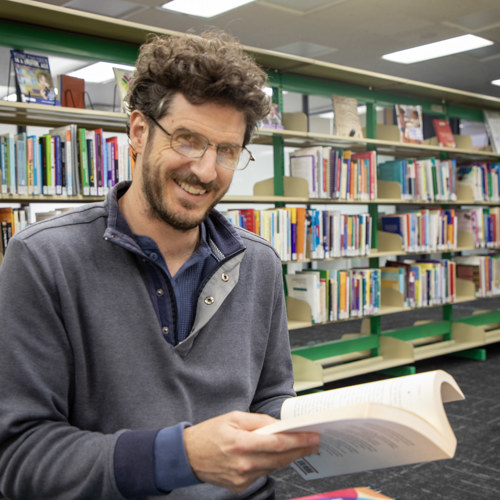
From Painting to Primary Teaching
Learn more about how the Commonwealth Prac Payment made it possible for Peter to pursue a new career!
Requirements
The Bachelor of Education (Early Years and Primary) has designed selection criteria and an interview process to ensure that applicants can clearly demonstrate both academic and non-academic competencies needed for effective teacher practice. The Bachelor of Education selection processes are in accordance with the VSF and take into consideration both academic and non-academic attributes. The program is committed to assessing an applicant’s whole of study experience, life experience and aptitude for teaching and learning.
The one on one interview with an academic within the program will assess a candidates personal attributes.
These attributes include motivation to teach, strong interpersonal and communication skills, willingness to learn, resilience, self-efficacy, conscientiousness, organisational and planning skills. For further information on the VSF please visit the Victorian Institute of Teaching website.
|
ADMISSION REQUIREMENTS Bachelor of Education (Early Years and Primary) |
|
|
COURSE ADMISSION REQUIREMENTS |
ALL APPLICANTS
Academic Pre-requisites
|
|
APPLICANTS WITH RECENT SECONDARY EDUCATION (CURRENT YEAR 12 or within the past two years) |
|
|
APPLICANTS WITH VOCATIONAL EDUCATION AND TRAINING (VET/TAFE) STUDY (including Diploma ECEC) |
Applicants may demonstrate the equivalence by completing the multiple-choice component of the Special Tertiary Admission Test (STAT). Refer below for information. Applicants who have successfully completed a Diploma ECEC may be awarded credits to a maximum of one year towards the Bachelor degree. |
|
APPLICANTS WITH PRIOR HIGHER EDUCATION STUDY |
A completed or partial completion of a Bachelor degree level qualification may satisfy Academic Pre-requisites |
|
APPLICANTS WITH WORK AND LIFE EXPERIENCE |
Applicants may demonstrate the equivalence by completing the multiple-choice component of the Special Tertiary Admission Test (STAT). Refer below for information. |
|
PRIOR TO ENROLMENT (PROFESSIONAL PLACEMENT) |
|
|
ESSENTIAL COURSE REQUIREMENT |
All students are expected to attempt the Literacy and Numeracy Test for Initial Teacher Education (LANTITE) before the end of their first year of study (or equivalent 96 credit points). In the case of First Nations language speakers, recognition of First Nations language proficiency by the relevant cultural authority is an acceptable alternative standard to LANTITE. All students must successfully pass LANTITE before enrolling in year 4 of the course. Students must demonstrate successful performance of the core content and pass the TPA as a requirement for graduation. |
|
SPECIAL TERTIARY ADMISSIONS TEST (STAT) |
Applicants must not have been enrolled in secondary studies for at least two years. Applicants for our course should apply for the STAT multiple choice. |
Higher Education Admissions Criteria
As well as the specific entry requirements above, Melbourne Polytechnic admits students on the basis of the following categories:
If you have already studied higher education: Y ou may meet the admissions criteria for higher education at Melbourne Polytechnic if your highest level of study since leaving secondary education is a higher education course, such as a university degree.
If you have studied a VET course: You may meet the admissions criteria for higher education at Melbourne Polytechnic if your highest level of study since leaving secondary education is a vocational education and training (VET) course.
If you have recent secondary education: You may meet the admissions criteria for higher education at Melbourne Polytechnic if you are a recent secondary education student whose admission is primarily based on the completion of Year 12 within the past two years.
If you have work and life experience: You may meet the admissions criteria for higher education at Melbourne Polytechnic if you have work and life experience and left secondary education more than two years ago and have not undertaken vocational education training (VET) or higher education study since then.
All applicants will be required to attend an interview, which can be arranged by Skype or telephone, demonstrating personal attributes suitable for teaching; capacity to undertake work at degree level as demonstrated through participation in an interview and selection process including completion of a written task.
Academic: Australian Year 12 equivalency, to include studies equivalent to VCE Units 1 and 2 Mathematics.
English: Academic IELTS 7.0 or Melbourne Polytechnic recognised equivalency with no individual band below 7.0.
Credit for Prior Learning: Applicants holding the Australian Diploma of Early Childhood Development and Care CHC50121 or equivalent qualification may also be eligible to eight subject credits and can enrol directly into the second year of the program.
Prior to enrolment (professional placement): Must possess a valid Working with Children Check prior to commencing placement.
Essential course requirement: All students are expected to attempt the Literacy and Numeracy Test for Initial Teacher Education (LANTITE) before the end of their first year of study (or equivalent 96 credit points).
In the case of First Nations language speakers, recognition of First Nations language proficiency by the relevant cultural authority is an acceptable alternative standard to LANTITE.
All students must successfully pass LANTITE before enrolling in year 4 of the course.
https://teacheredtest.acer.edu.au/.
Next Steps
Melbourne Polytechnic is committed to providing transparency to the admissions process. In line with this commitment, we provide you with information that will help in making informed choices about your future studies.
Find out more about Melbourne Polytechnic’s commitment to admissions transparency.
Applicants for this course will need to have met the academic requirements. Meeting the minimum admission criteria does not guarantee entry into this course. Past academic performance may be considered.
You may also be required to attend an interview to discuss your career plans, aptitude and understanding of your chosen course of study and the requirements of tertiary study. (This may be conducted face-to-face or by through a video conference call using Zoom or other application).
During your interview, you may be asked to provide:
- Your CV outlining your relevant work and life skills and experience
- Any letters of reference from employers
- Documents relating to prior study including course transcripts and subject outlines from other Higher Education Providers if you wish to apply for credit
When we receive your application, the International Office will be in contact with you shortly to discuss your application and provide you additional instructions.
If you'd like to speak to one of our International Office staff directly, call 1300 635 276
Local student means; you are an Australian citizen or permanent resident, a New Zealand citizen or a permanent humanitarian visa holder.